
Best Online Craps Casinos in the UK
 Available in GB
Understand licensing, game fairness, betting rules and UK availability before comparing craps casinos or playing for money.
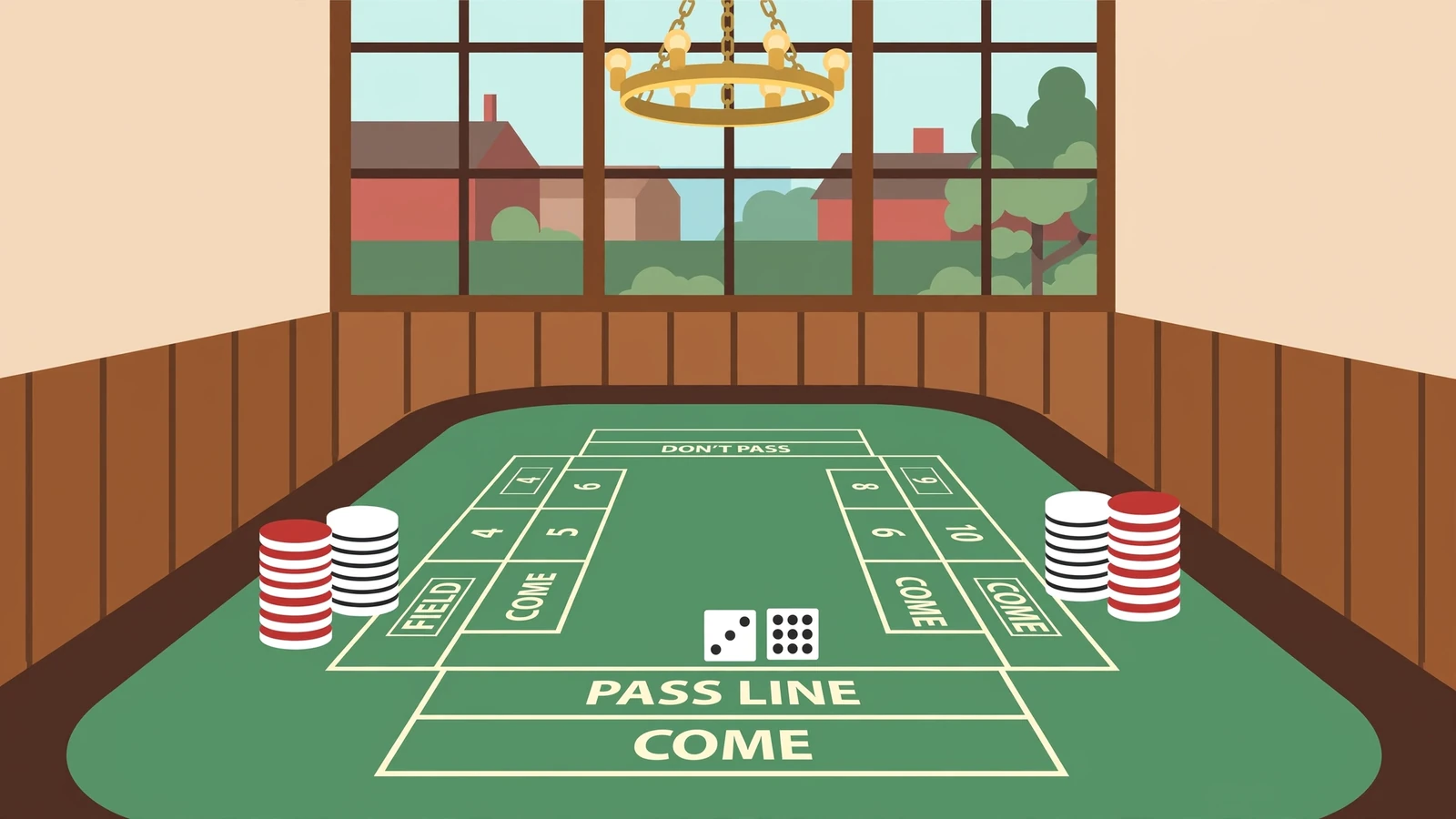
Table of Contents
- How UK Casino Craps Software Is Licensed and Tested
- What UK Players Should Expect from a Craps Casino
- Comparing UK Casinos for Online Craps in 2026
- How to Play Craps Online: Bets, Rounds and Table Decisions
- Free Craps, Bubble Craps and Practice Games in the UK
- How to Learn Casino Craps Before Playing for Money
- Live-Dealer, Crypto and Crapless Craps: What UK Availability Depends On
- Craps House Edge Compared with Other Casino Games
- The Odds of Winning a Craps Round at a UK Casino
- Reading the Casino Craps Layout and Chip Positions
How UK Casino Craps Software Is Licensed and Tested
Online casino craps for real money in the UK rests on two separate layers of control: the legal status of the gambling service and the technical integrity of the game itself. A casino operator must be authorised to provide online gambling to consumers in Great Britain, while the game provider supplying the craps product must meet the applicable UK requirements for fairness and security. These functions are related, but they are not interchangeable.
UK licensing and the role of the game provider
Game providers offering content to UK players must be licensed by the UK Gambling Commission or work with operators that hold the relevant UKGC authorisation. The operator is responsible for making the gambling service available to consumers, whereas the provider supplies the casino software and game content. Consequently, the presence of a craps game on a website does not, by itself, establish that the game or the hosting service is lawful for the UK market.
A remote operating licence is required for online gambling activities in Great Britain. The UK Gambling Commission assesses matters including identity and ownership, finances, integrity, competence and criminality when considering an application. It also maintains a public register of current operating and personal licences. A casino’s status can therefore be checked against the register by matching the operator’s name or licence number and confirming that the listed domain corresponds with the website being used.
This distinction matters for a casino craps game because licensing is not merely a commercial label. It establishes the regulatory framework under which the operator may offer gambling services and under which relevant software can be supplied to UK customers. A platform feature, payment option or promotional term does not replace that requirement.
Technical standards for online craps
UK-facing game providers must meet technical standards for fairness and security. For craps, this concerns the mechanism that determines the result of each roll or simulated outcome, the way the result is processed by the game, and the security of the software environment in which the game operates.
Certified random number generator software must be used to deliver random outcomes. The RNG is the technical component responsible for producing the random result; the visible table, dice animation and betting interface present that result to the player. An animation can make a game resemble a physical craps table, but visual presentation is not evidence of randomness. The relevant question is whether the underlying outcome-generation system has been tested and certified under the standards applicable to the UK market.
Randomness also does not mean that every sequence will appear evenly distributed in a short session. Certification addresses whether the system produces outcomes in an unbiased and statistically appropriate manner over the relevant testing process. It does not turn a particular roll into a prediction of the next one, nor does it remove the mathematical conditions defined by the game’s published rules.
Published rules and RTP information
UK-facing providers must offer clear game rules and RTP information. These materials define how the craps product operates and provide the basis for understanding its theoretical return. The rules should explain the available bets, the conditions under which a wager wins or loses, and the treatment of outcomes within the game’s own format. RTP information describes the long-run theoretical return associated with the game as configured by the provider; it is not a promise about the result of an individual round or playing session.
For online casino craps, published information is particularly important because several products may use the same broad table concept while differing in rules, bet availability or mathematical configuration. The title alone is insufficient evidence that two games are identical. The rules and RTP disclosure are the authoritative points of reference presented with the specific game.

This information also separates game integrity from operator-level conditions. A casino may determine account procedures, promotional terms or withdrawal arrangements, but those matters do not alter the certified random mechanism or the RTP built into the game software. Conversely, a technically compliant game does not demonstrate that every feature of the surrounding casino service is suitable; the game and the operator remain distinct areas of assessment.
Independent testing laboratories
Independent testing laboratories examine whether the technical claims made about casino software are supported by evidence. Organisations such as eCOGRA, iTech Labs and GLI check that RNG outcomes are random and unbiased and that the results match the published RTP. Their role is different from that of the casino operator: the operator hosts the game, while the testing laboratory evaluates the relevant software and mathematical behaviour independently.
Testing therefore addresses more than whether the dice graphic appears convincing. It examines the outcome-generation process and compares observed performance with the theoretical information disclosed for the game. Where the software passes the applicable assessment, the published rules and RTP have a technical basis rather than relying solely on the provider’s description.
Independent testing verifies that RNG outcomes are random and unbiased, ensuring the results match the published RTP.
Independent testing is not a guarantee of a winning result. It cannot identify which side will win a particular roll, and it does not imply that a player will receive the stated RTP during a short period. Its purpose is to verify the integrity of the system over the testing framework and to establish that the game behaves in accordance with its documented design.
What this establishes for UK real-money craps
The regulatory basis for real-money online craps in the UK can therefore be assessed through several connected checks:
- the service is offered by an operator authorised by the UK Gambling Commission;
- the relevant game provider is licensed for UK-facing activity or supplies content through an authorised operator;
- the software uses certified RNG technology;
- the game rules and RTP information are clearly available;
- independent testing has examined randomness, lack of bias and correspondence with the published RTP.
Gambling in the UK is available only to people aged 18 and over. Age eligibility is a legal condition of access, separate from the technical certification of the craps software. Together, these requirements define the foundation on which a UK casino craps product may be offered. They do not determine which casino has the widest catalogue or the most favourable account conditions; those are operator-level questions addressed separately.
What UK Players Should Expect from a Craps Casino
A UK craps casino is an online gambling platform that makes a craps game available within a broader casino environment. The important distinction is between the game itself and the service hosting it. The craps table is supplied by a specialist game provider, while the casino operator presents that content through its website or app, manages the player account and handles the surrounding transaction and compliance processes.
This distinction matters because a casino brand does not necessarily build the games displayed on its platform. Casino software is developed by specialist third-party companies. Those game providers create the products, arrange independent testing and certification for fairness through third-party testing houses, and license the games to casino operators. The operator then incorporates the licensed content into its own online casino.
The provider and the casino operator
The provider is responsible for the game product. Its work includes the underlying software, the game presentation and the technical operation of the title. The operator is responsible for making that product available within a particular gambling service. The commercial relationship is based on the operator paying to host provider games, while the provider receives a revenue share.
For a person looking for a craps casino online in the UK, this means that the name of the casino and the name associated with the table may be different. The casino brand is the consumer-facing operator; the provider is the company behind the game. The same provider’s craps product can therefore appear on more than one platform without the casino brands having created separate versions of the underlying game.
A craps casino should consequently be assessed at two levels. The first is the game content: whether the desired craps product is available and whether its presentation suits the intended form of play. The second is the operator environment: how the account is opened, how identity checks are handled, which payment services are supported, how withdrawals are processed and what customer assistance is available.
What the online casino platform does
An online casino platform is more than a catalogue of games. Its functions include game aggregation, payment processing, know-your-customer checks, compliance tools and customer-support systems. These services surround the craps game but are not part of the game provider’s software.
Game aggregation determines how content is organised and found. A platform may place craps under a table-games category, combine it with other casino products or display it through search and filtering tools. Availability is therefore a platform-level matter. A game may exist within a provider’s catalogue but not be presented by every operator.
Payment processing is also an operator function. The deposit and withdrawal interface belongs to the casino platform, as do the account records associated with those transactions. Bonus terms are likewise established by the operator rather than by the provider. A promotional offer attached to a craps casino account should therefore be read as a condition of that casino service, not as a property of the craps software.
The same separation applies to customer support. Questions about account access, verification, deposits, withdrawals or promotional eligibility are directed to the operator. The game provider’s role does not turn it into the customer-service department for every casino that hosts its content.
Player-facing conditions
The conditions attached to a craps casino are shaped by the operator’s policies and platform design. These include:
- the games made available through the catalogue;
- the terms attached to bonuses and free spins;
- the payment methods shown at the cashier;
- the handling of identity and compliance checks;
- withdrawal processing arrangements;
- customer-support channels;
- responsible-gambling tools;
- the scope of self-exclusion coverage.
A casino’s licence is also an operator-level matter. Operators providing online gambling services to consumers in Great Britain must hold a UK Gambling Commission licence, regardless of where they are based. The UK Gambling Commission maintains a public register of current operating and personal licences. A casino claiming to serve the UK market can be checked by matching its operator name or licence number with that register and confirming that the listed domain corresponds to the platform being used.
One example of the distinction between infrastructure and brand is SkillOnNet, which operates under UK Gambling Commission licence number 39326. The licence identifies the regulated operator behind the relevant service; it does not mean that SkillOnNet necessarily created every game available through that platform. The provider and operator remain separate roles even where a platform hosts a large catalogue of casino products.
What “online craps casino” describes
The phrase online craps casino describes a casino service where craps is part of the available table-game content. It does not identify a single software company, a single interface or a single set of account conditions. “Casino craps” refers to the game as presented within that environment, while the practical account experience depends on the operator hosting it.
This is why two UK casinos can offer the same craps title while differing in payment methods, bonus conditions, support systems or responsible-gambling features. The game content may be licensed from the same provider, but the surrounding service is controlled by separate operators. Conversely, a casino can offer a broad catalogue without every product having the same provider, interface or technical presentation.
The relevant expectation is therefore not that a casino brand owns the craps software. It is that the platform clearly identifies its operator status, provides access to its account and payment conditions, and presents the game within a UKGC-licensed online casino service. The provider determines the game product; the operator determines the conditions under which that product is offered.
Comparing UK Casinos for Online Craps in 2026
This shortlist highlights UK-licensed operators for players exploring online craps in 2026. Use the key facts for each brand to assess which option best fits your preferences for bonuses, deposits and withdrawals.
License: UKGC Operator Licence · Bonus: £100 bonus · Payout speed: Within 24 hours · Min. deposit: £10 ProgressPlay Limited holds a UKGC Operator Licence and offers a £100 bonus. It also lists a £10 minimum deposit and payouts within 24 hours.
License: UKGC Operator Licence · Bonus: £200 welcome bonus · Payout speed: Within 48 hours · Min. deposit: £10 32Red is a UKGC-licensed operator with a £200 welcome bonus. Its listed minimum deposit is £10, with payouts within 48 hours.
License: UKGC Operator Licence · Bonus: £50 bonus · Payout speed: Within 48 hours · Min. deposit: £10 Platinum Gaming Limited operates under a UKGC Operator Licence and offers a £50 bonus. Players can deposit from £10, with payouts listed within 48 hours.
License: UKGC Operator Licence · Bonus: £20 bonus · Payout speed: Within 48 hours · Min. deposit: £10 Silverbond Enterprises is UKGC licensed and provides a £20 bonus. Its minimum deposit is £10, while payouts are listed within 48 hours.
License: UKGC Operator Licence · Bonus: £100 bonus · Payout speed: Within 24 hours · Min. deposit: £10 Genesis Global Limited holds a UKGC Operator Licence and offers a £100 bonus. It lists a £10 minimum deposit and payouts within 24 hours.
License: UKGC Operator Licence · Bonus: £100 bonus · Payout speed: Within 24 hours · Min. deposit: £10 LeoVegas is a UKGC-licensed operator offering a £100 bonus. Its listed minimum deposit is £10, with payouts within 24 hours.
Comparing UK casinos for online craps requires separating the game from the platform that hosts it. The relevant question is not only whether a craps title appears in the lobby, but also how the casino operates around that title. Licensing, catalogue structure, payments, withdrawals, customer support, promotional terms and responsible-gambling controls belong to the operator side of the comparison.
A practical comparison framework
The first filter is regulatory status. A casino accepting players in Great Britain for online gambling must hold a remote operating licence from the UK Gambling Commission. The Commission maintains a public register of current operating and personal licences. A casino’s operator name or licence number can therefore be checked against the register, including the domain associated with the licence. This is more precise than relying on a licence badge displayed on a casino website.
The next point is the casino catalogue. A platform may provide access to games from several game providers because it has licensing agreements with those studios and has integrated their catalogues. This can make a casino attractive to players who want craps alongside slots, table games or live casino content. Catalogue size, however, does not establish that a craps title is better. It indicates the breadth of the surrounding platform.
Offers more than 6,000 games, including over 50 exclusive Slingo Originals.
A profile review of UK casino operators reports that Genting Casino carries 81 providers and more than 5,000 games, including Playtech, Blueprint Gaming, NetEnt, Pragmatic Play, Nolimit City, Hacksaw Gaming, Push Gaming, Big Time Gaming and Evolution Gaming’s live casino. The same type of source reports that Mega Casino carries 73 providers and more than 5,000 games, with an exclusive Playtech relationship described as providing early access to new releases. These figures are source-specific descriptions, not a general market standard, and they do not by themselves show which platform has the most suitable craps offering.
A separate profile review describes Slingo as offering more than 6,000 games and 50 or more exclusive Slingo Originals titles unavailable elsewhere. That may matter to a player evaluating the wider casino catalogue, but exclusivity in another game category is not evidence of superior craps software. The comparison should therefore record whether the desired craps game is present, rather than treating total game counts as a substitute for availability.
Operator conditions around the game
Payment and withdrawal conditions are operator-level matters. The casino, not the game provider, determines which payment methods are accepted, how identity checks are handled and how withdrawals are processed. Credit cards must not be accepted for gambling transactions in the UK. A comparison should therefore identify the permitted payment routes without presenting an unverified method or processing time as a guaranteed feature.
Bonuses require the same caution. A promotion may apply to selected games, exclude table games, or impose conditions that make it unsuitable for craps play. The relevant comparison points are the stated eligibility rules, whether craps contributes to any promotion, the expiry terms and the withdrawal conditions. A headline offer alone is insufficient evidence of value. Where a casino advertises a no wagering bonus, the exact terms still determine how that offer can be used.
Support is another platform distinction. Assistance with account verification, payment queries, withdrawals or promotional terms comes from the casino operator rather than the game provider. A useful comparison records the available contact channels and the clarity of the help materials, without assuming that a large game catalogue guarantees effective support.
Responsible-gambling provision should be assessed alongside commercial features. UK remote operators must belong to GamStop, the national online self-exclusion scheme. They must also prompt new customers to set a deposit limit before the first deposit. Players must be able to stop playing and retain the remaining deposit and winnings earned from that deposit. These controls are not promotional advantages; they are part of the operating framework against which a UK-facing casino should be assessed.
Why the same craps game can appear at several casinos
The presence of an identical title on multiple casino sites does not mean that each casino has developed its own version. Game providers create the content and license it to casino operators. The operator integrates the provider’s catalogue into its platform, while the surrounding account, payment and support functions remain tied to the casino.

A profile review of casino platforms states that the same game may be available across several UK casinos while the game itself remains identical; differences can instead arise in bonuses, withdrawal speed, support and the surrounding game selection. This is a source-specific observation rather than an established rule for every title. It nevertheless identifies the correct comparison logic: the craps software and the casino service should be examined as separate components.
SkillOnNet illustrates the platform distinction. A profile review reports that SkillOnNet powers the online operations of PlayOJO, Winlandia and Genting Casino, and hosts approximately 4,000 games. Shared platform infrastructure can therefore connect different casino brands without making their public-facing conditions identical. Brand presentation, account terms, promotions, payment arrangements and support remain matters for the individual operator and its published conditions.
The strongest comparison of craps casinos in the UK consequently has two layers. The first confirms lawful operation and the availability of the required game. The second examines the operator’s catalogue depth, payment and withdrawal terms, support, bonus rules and responsible-gambling tools. This method avoids treating a large catalogue or a familiar brand as proof that a casino is the best online casino for craps. It also explains why several UK-facing casinos may offer the same craps software while differing materially in the experience surrounding it.
How to Play Craps Online: Bets, Rounds and Table Decisions
Online craps is organised around a sequence of dice rolls, with players placing bets on the table before or during that sequence. The interface represents the same decision points as a physical table, but presents them through clickable betting areas, chip controls and status indicators. A useful starting point is therefore not a betting system, but the order in which a round operates.
The sequence of an online craps round
A new round begins with the come-out roll. The principal opening wager is the Pass Line bet. If the come-out roll produces a natural result, the Pass Line wins immediately. If it produces a losing result, the bet loses immediately. If a point number is established, the table marks that number and the round continues until the point is either repeated or the relevant losing result appears.
The point is displayed prominently on the interface, often through a highlighted number or a point indicator. This status matters because it changes the meaning of subsequent rolls. The table should also show whether it is accepting come-out bets, operating with an established point or waiting for the next decision.
The Don’t Pass bet works in the opposite direction to the Pass Line in its principal purpose. It is placed before the come-out roll and is resolved according to the result of that opening stage and the later point sequence. The online layout should identify the area clearly, since Pass Line and Don’t Pass occupy separate positions and represent opposing outcomes.
Betting Sequence Check
- Confirm the specific craps variant is intended
- Review the rules and RTP information
- Identify if the table is at the come-out stage or has an active point
- Select chip value and place the intended wager
- Verify the wager summary and displayed point before the roll
Once a point has been established, additional bets become available. A Come bet resembles a new Pass Line bet placed after the come-out stage: it begins with the next roll and can establish its own point. A Don’t Come bet provides the corresponding opposing position. These bets are shown in separate sections of the layout, and the interface should indicate when each has moved from an initial state to a point-based state.
Principal bets and what they represent
The main bets can be understood by the event they predict rather than by memorising the entire layout.
- Pass Line: a bet supporting the main progression of the round, beginning with the come-out roll.
- Don’t Pass: a bet opposing the Pass Line outcome.
- Come: a new point-style bet made after the come-out stage.
- Don’t Come: the opposing form of a Come bet.
- Field: a single-roll wager on the result landing in the field outcomes displayed on the layout.
- Place bets: wagers on selected point numbers being rolled before the relevant losing result.
- Odds bets: additional wagers connected with an established Pass Line, Don’t Pass, Come or Don’t Come position, where the game allows them.
The exact availability and presentation of these options depend on the game interface. UK-facing game providers must provide clear rules and RTP information, so the paytable or rules panel should be checked before a wager is made. That information explains how a selected bet is settled, while the table itself shows its current status.
The Field bet differs from a Pass Line or Come bet because it is resolved on the next roll rather than following the longer point sequence. Place bets also differ because they focus on selected numbers after the round has reached the appropriate stage. Odds bets are not independent predictions of the whole round; they are linked to an existing contract-style bet and should be treated as an addition to that position.
Reading the table interface
The principal visual elements are consistent in purpose even when their design varies between game studios. The layout normally includes:
- A chip selector, used to choose the value of the wager.
- Betting zones for Pass Line, Don’t Pass, Come, Don’t Come, Field and number-based bets.
- A roll or action control, which may be unavailable while the table is processing a decision.
- A point display, showing whether a point is active.
- A dice and result history area, recording recent rolls.
- A rules, paytable or information panel, describing settlement conditions and RTP.
A chip placed on a betting area is not necessarily a completed wager until the interface confirms it. Some games use a separate confirmation control; others register the bet immediately when the table is open for betting. The displayed balance and wager summary should therefore be read before the roll begins.
The result history can help identify the current stage, but it does not predict the next outcome. Each roll is generated by the game’s certified random outcome system, and the previous result does not create a reliable basis for choosing the next bet. A history panel is consequently a record of events, not a strategy signal.
A practical decision order
A disciplined sequence reduces interface errors:
- Confirm that the game is the intended craps variant.
- Open the rules and RTP information before selecting a bet.
- Check whether the table is at the come-out stage or has an active point.
- Select the chip value and place only the intended wager.
- Verify the wager summary, balance and displayed point.
- Allow the roll to settle before making another decision.
- Review whether the bet has won, lost or moved into a continuing state.
- Remove or add bets only when the interface permits the relevant action.
This process is more reliable than selecting several areas at once without checking how they interact. It also separates the question of how to play craps at a casino from the question of which casino hosts the game. The operator determines account conditions and platform functions, whereas the game interface presents the rules and settlement of the craps table.
Game studios may be associated with different gameplay styles and volatility profiles, according to a specialist industry review, but that observation does not replace the rules displayed for the specific title. Nor does an operator’s relationship with a provider establish that a particular betting approach is more successful. Early access or exclusive releases have also been described in specialist industry coverage, yet availability does not alter the sequence of a craps round.
For UK play, the game should be available through a UKGC-licensed online casino, and gambling is restricted to people aged 18 and over. The central practical task remains straightforward: identify the round stage, understand what each selected bet predicts, read the rules panel, and confirm the table state before the next roll.
Free Craps, Bubble Craps and Practice Games in the UK
Free-play craps has a limited but useful role in the UK casino market. It allows the interface, table controls and basic sequence of a round to be examined without placing a real-money wager. That makes it different from regulated real-money online craps, where the operator, payment process and player account carry separate significance.
A free version may be presented as a casino craps table game in play mode, a demonstration table or a practice environment. The format can show how chips are selected, how bets are placed or removed, and how the table displays the current outcome. It may also indicate which betting areas are available. Such features help establish whether the interface is intelligible before a deposit is considered.
Free play does not establish that a casino is suitable for real-money gambling. It does not demonstrate the quality of customer support, the handling of withdrawals, the operation of responsible-gambling controls or the status of the operator’s licence. Nor does a demonstration game by itself prove that the same conditions apply when money is at risk. Those questions belong to the real-money casino and its regulated operating arrangements.
Bubble craps and electronic formats
Bubble craps is an electronic presentation in which the dice mechanism and table display replace the conventional felt-table presentation. A UK player searching for a bubble craps casino may therefore encounter a format that looks different from online craps with a dealer or a standard digital layout. Its practical value in free mode is mainly observational: it can show the pace of the round, the available betting controls and the way results are displayed.
The label “bubble craps” does not, by itself, identify the operator, the game provider or the regulatory position of a website. Availability in the United Kingdom depends on the relevant provider and operator meeting the applicable requirements for UK-facing gambling services. A free demonstration should not be treated as evidence that a particular real-money version is available to UK players under acceptable conditions.
What practice mode can and cannot show
Practice play is most informative when used to inspect mechanics rather than to simulate financial results. It can help distinguish the main betting areas, reveal whether the interface explains a selected wager and show how a completed round is recorded. It can also expose unclear controls before any funds are deposited.
The underlying UK-facing game must still meet technical standards for fairness and security when offered for gambling. Providers must use certified random number generator software for random outcomes and provide clear rules and RTP information. These requirements concern the regulated game offering; a free-play screen should not be treated as an independent certification of either the software or the casino.
Gambling in the UK is restricted to people aged 18 and over, including access to gambling services connected with real-money play. Free access is therefore not a reason to treat age requirements as irrelevant. A practice game is best understood as an interface and familiarisation tool, not as proof of operator quality, a guarantee of future results or a substitute for regulated real-money play.
How to Learn Casino Craps Before Playing for Money
Learning casino craps is mainly a matter of recognising the layout, following the sequence of a round and understanding what the displayed information means. The process is more reliable when each stage is studied separately rather than treated as a collection of betting shortcuts.
Learning Process
Identify the main areas of the table and associate each section with its written rules.
Trace a single principal bet through a complete round to understand its specific outcomes.
Read the rules and RTP details to understand how the specific game settles wagers.
Start with the Table Layout
The first task is to identify the main areas of the table and the labels attached to them. A digital craps table presents the available bets visually, while chips placed on the layout indicate which selections are active. The purpose at this stage is not to select every available option, but to associate each section with its written rules.
The order of play should also become familiar. A round begins with the table in its initial state, followed by a dice result and any subsequent outcomes required by the rules of the selected bet. The interface normally records the current result and shows whether a wager remains active, wins or loses. Reading these status indicators prevents the layout from being treated as a static betting board.
Follow One Bet at a Time
Early study is clearer when one principal bet is followed through a complete round. The relevant questions are procedural:
- When can the bet be placed?
- Which dice outcomes settle it?
- Does it remain active after the first roll?
- Does the table display a continuing point or another round state?
- When are winnings credited or the wager removed?
This method explains how craps works at a casino without requiring a broad survey of every proposition on the layout. The rules supplied with the game should determine the answers; assumptions based on another craps table may not apply to a different implementation.
Read the Rules and RTP Information
UK-facing game providers must provide clear game rules and RTP information. These details should be read before real-money play, particularly where several bets have different conditions. RTP is a long-run statistical measure, not a prediction about the result of an individual round.
Randomness should be understood in the same limited way. Independent testing laboratories such as eCOGRA, iTech Labs and GLI assess whether RNG outcomes are random and unbiased and whether they correspond with the published RTP. That information supports familiarity with the game’s operation; it does not turn a previous result into evidence about the next one.
A sound learning sequence is therefore simple: identify the layout, trace one wager through its possible states, read the applicable rules and RTP, then observe how the interface records each result.
Live-Dealer, Crypto and Crapless Craps: What UK Availability Depends On
Live-dealer craps concerns presentation rather than a separate regulatory category. The game is shown through a streamed table with a dealer, while the underlying casino product still comes from a game provider and is made available through an online casino platform. The casino brand does not necessarily build the game itself: specialist third-party companies produce casino software, and platforms integrate that content alongside payment processing, KYC, compliance tools and customer support systems.
For UK players, the decisive condition is the operator’s position in the British market. A provider supplying content to UK customers must hold the relevant UK Gambling Commission authorisation or work with operators that do. Consequently, a live presentation, branded table or prominent dice interface cannot substitute for checking whether the casino offering the game is authorised to serve consumers in Great Britain. A live dealer changes how the round is displayed, not the licensing responsibility attached to the operator.
Crypto-related searches require a separate distinction. A casino may describe deposits or withdrawals through digital assets, but a payment method does not establish that the casino is permitted to offer gambling to UK customers. A bitcoin casino with craps, or a site presenting itself as a crypto casino with live craps, therefore requires the same operator-level assessment as any other online casino. The payment model and the game presentation are separate from the compliance status of the platform. No conclusion about UK availability follows from the presence of a cryptocurrency option alone.
Crapless craps is likewise an alternative game layout, not evidence of a different licensing framework. Its table may remove or alter familiar bets, so the displayed rules and paytable matter before play. Availability depends on whether a game provider has supplied that title and whether a UK-facing operator has integrated it into its catalogue. The visual arrangement of a crapless craps table cannot confirm either point.
The practical result is a three-part distinction: live dealer describes presentation, crypto describes a possible payment route, and crapless craps describes a game variant. None of these features independently demonstrates that a casino is available lawfully to UK players.
Craps House Edge Compared with Other Casino Games
House edge is a mathematical measure of the casino’s expected advantage over a large number of wagers. In a UK craps evaluation, it belongs alongside the game’s published rules and RTP information, not among claims about bonuses, payments or customer support. Those operator-level conditions describe the platform; house edge describes the underlying wager.
Mathematical Advantage
House edge is a specific measurement of the casino’s advantage that varies depending on the individual bet placed.
Craps does not have one universal house-edge figure for every bet. Each wager is assessed separately, so a meaningful comparison requires the exact bet and the rules attached to it. A headline comparison with roulette, blackjack or slots is therefore incomplete unless it identifies the relevant wager and uses comparable published information. Unsupported percentages should not be treated as evidence of value.
RTP is the complementary measure: it describes the proportion of stakes a game is designed to return over the long run, while house edge represents the corresponding theoretical advantage retained by the casino. Neither measure predicts the result of a particular session or guarantees an individual outcome. Short-term results can differ substantially from long-run mathematical expectations.
For UK players, the useful evidence is transparent documentation. A craps game should display its rules, available bets and RTP information clearly enough for the mathematical basis of each wager to be understood. Independent testing laboratories, including eCOGRA, iTech Labs and GLI, check whether random outcomes are unbiased and whether results correspond with the published RTP. This makes the comparison factual rather than promotional: the relevant question is not which casino advertises the strongest claim, but whether the game’s underlying information is complete, specific and independently tested.
The Odds of Winning a Craps Round at a UK Casino
The odds of winning craps at a UK casino depend on what “winning” describes. A single roll has a defined probability for each possible total, while a betting decision concerns whether a selected wager wins, loses or remains unresolved after that roll. These are separate measurements and should not be treated as interchangeable.
A round can therefore produce a win without implying that the overall session is profitable. The outcome of one wager says nothing about the long-term performance of the game. Random outcomes are generated independently: certified RNG software supplies the random result, and the game engine converts it into the corresponding table outcome. The previous result does not make a particular total more or less likely on the next roll.
RTP and house edge describe a different timescale. RTP is a long-run return built into the game’s mathematical model; house edge represents the casino’s corresponding long-term advantage. Neither figure predicts the result of one round, one bet or one short playing session. A game may publish RTP information while individual outcomes continue to vary substantially.
The probability attached to a bet also differs from its expected return. Two wagers can have different chances of winning and still produce different long-term results because their payouts and losing conditions are not identical. Consequently, a high chance of an individual win is not, by itself, evidence of favourable value.
For UK players, published probability, rules and RTP information should be read as mathematical descriptions rather than forecasts. Casino licensing concerns whether the service may operate lawfully; it does not turn a random round into a predictable event or guarantee a winning outcome.
Reading the Casino Craps Layout and Chip Positions
A digital craps table translates the physical layout into marked betting areas. The central feature is separation: each box corresponds to a particular wager, while chips placed inside that box show which selections are active. The arrangement is not merely decorative; it provides the visual reference needed to identify a bet before confirming it.
The Pass Line and Don’t Pass areas are generally positioned near the lower edge of the table. Come and Don’t Come sections are separate areas because they apply to later points in the round. Number boxes, including the point numbers, sit across the central section. Place, Buy and Lay selections may be represented by chips on or beside the relevant number, depending on the interface.
Proposition bets occupy a distinct central area. Their labels can be compact, so the displayed rules should be checked before a chip is committed. UK-facing game providers must provide clear game rules and RTP information; these details should remain accessible from the table or its information panel.
Online chips may appear in different colours for different players, with a balance indicator showing the value available for placement. A selected chip normally follows the cursor or appears in a highlighted state before confirmation. Once placed, its position identifies the wager, while a control panel may show its stake and potential return.
The repeat, remove, or clear bets controls should be distinguished from the chip display. A chip shown on the layout represents a selected position, not necessarily a completed wager, until the interface confirms placement. This distinction is particularly important when reviewing several areas at once.
Created by the ”Casinouk Games Hub” editorial team.