
Casinos That Accept Litecoin in the UK
 Available in GB
Compare payment conditions, mobile play, bonuses and licensing risks before using Litecoin at an online casino.

Table of Contents
- The Current Position of Litecoin Casinos in the UK
- How Litecoin Casino Deposits and Withdrawals Compare with Other Options
- Depositing Litecoin at Online Casinos: Availability and Conditions
- Playing Online Slots with Litecoin Payments
- Litecoin Slots for Real-Money Play on Mobile and Desktop
- Card and Litecoin Deposit Routes at UK Casinos
- Litecoin Casino Bonuses and No-Deposit Promotion Conditions
- Minimum Litecoin Deposits and Mobile Payment Practicalities
- Alternatives to Litecoin for Casino Deposits and Slots
- Litecoin Casinos Outside GamStop: Licensing and Payment Risks
The Current Position of Litecoin Casinos in the UK
Litecoin gambling remains a question of regulatory status before it becomes a question of payment convenience. In Great Britain, a business that provides remote gambling facilities to consumers generally needs an operating licence from the Gambling Commission. The requirement can also apply when an operator advertises its services to people in Great Britain. The regulator licenses operators and enforces rules covering advertising, game integrity and financial transactions.
This creates an important distinction for searches concerning casinos that accept Litecoin in the UK in 2026. A casino may be accessible to British users without being a UKGC-licensed casino. Accessibility, advertising aimed at British consumers and licensing status are separate issues. A site displaying Litecoin among its payment options is not, by that fact alone, evidence that it holds a Gambling Commission operating licence.
UKGC licensing and Litecoin availability
The regulatory position for a UKGC-licensed remote casino is not equivalent to the position of an overseas operator serving British customers. The Gambling Commission’s remit covers businesses providing remote gambling facilities in Great Britain, while the payment method offered by an operator remains an operational choice subject to the applicable rules. Payment-method availability, fees and withdrawal requirements vary by operator.
This page highlights key details for UK players exploring casinos that accept Litecoin in 2026. Use the information below to assess each listed operator’s licensing, bonus, payout speed, and minimum deposit.
License: UKGC Operator Licence · Bonus: £100 bonus · Payout speed: Within 24 hours · Min. deposit: £10 ProgressPlay Limited holds a UKGC Operator Licence and offers a £100 bonus. Its stated payout speed is within 24 hours, with a £10 minimum deposit.
License: UKGC Operator Licence · Bonus: £200 welcome bonus · Payout speed: Within 48 hours · Min. deposit: £10 32Red is listed with a UKGC Operator Licence and a £200 welcome bonus. Payouts are stated as being available within 48 hours, and the minimum deposit is £10.
License: UKGC Operator Licence · Bonus: £50 bonus · Payout speed: Within 48 hours · Min. deposit: £10 Platinum Gaming Limited operates under a UKGC Operator Licence and provides a £50 bonus. The listed payout speed is within 48 hours, with a £10 minimum deposit.
License: UKGC Operator Licence · Bonus: £20 bonus · Payout speed: Within 48 hours · Min. deposit: £10 Silverbond Enterprises holds a UKGC Operator Licence and offers a £20 bonus. Its stated payout speed is within 48 hours, and the minimum deposit is £10.
License: UKGC Operator Licence · Bonus: £100 bonus · Payout speed: Within 24 hours · Min. deposit: £10 Genesis Global Limited is listed with a UKGC Operator Licence and a £100 bonus. Payouts are stated as being completed within 24 hours, with a £10 minimum deposit.
License: UKGC Operator Licence · Bonus: £100 bonus · Payout speed: Within 24 hours · Min. deposit: £10 LeoVegas holds a UKGC Operator Licence and offers a £100 bonus. Its listed payout speed is within 24 hours, with a £10 minimum deposit.
The supplied market restrictions also state that UKGC-licensed casinos must not accept cryptocurrency deposits. Consequently, Litecoin should not be treated as an available deposit route at a casino operating under a UK Gambling Commission licence. This is the central limitation behind claims about “all Litecoin casinos UK”: a broad list of sites accepting Litecoin cannot simultaneously be presented as a list of UKGC-licensed casinos accepting that currency.
The distinction matters because regulatory protection is attached to the operator’s licensing position, not to the Litecoin brand or the appearance of a cryptocurrency wallet address. The Gambling Commission’s role includes oversight of financial transactions, but it does not turn every payment method offered by an overseas casino into a UK-regulated payment route.
Overseas operators and Non GamStop casinos
Some Non GamStop casinos may operate under an overseas licence rather than a UK Gambling Commission licence. Such operators can therefore appear in searches for the best Litecoin casinos, new Litecoin casinos or casino sites that accept Litecoin deposits, even though they do not occupy the same regulatory category as a UKGC-licensed casino.
The term Non GamStop casino describes a relationship with the self-exclusion scheme; it does not establish that an operator holds a UKGC licence. An overseas licence is also not interchangeable with a Gambling Commission licence. The licensing jurisdiction, the operator’s stated customer eligibility and the terms governing deposits and withdrawals must be considered separately.

The available evidence does not establish a verified catalogue of named Litecoin casinos, Android casinos using Litecoin or specific sites that accept Litecoin deposits from British players. It therefore cannot support a ranked list of the best Litecoin casinos, the best Litecoin bonuses or the best Litecoin casino games. The absence of a named list is material: payment support may be changed by an operator, restricted by jurisdiction or removed without changing the general description of the site.
What Litecoin changes, and what it does not
Cryptocurrency deposits can be fast, according to a single specialist review, but transactions are generally irreversible and the value of some coins can change quickly. That source-specific observation is relevant to Litecoin, but it does not prove that every casino processes Litecoin in the same way or that every withdrawal follows the same timetable. Operator terms remain decisive.
Litecoin also does not determine the casino’s licensing status, game-integrity arrangements or advertising obligations. Those matters depend on the operator and its regulator. A payment option can indicate that a casino has configured cryptocurrency support; it cannot establish that the business is authorised to provide remote gambling facilities to British consumers.
The current position can therefore be stated narrowly. Litecoin-enabled gambling sites may remain visible to British users through overseas operators, including some Non GamStop casinos. However, cryptocurrency acceptance should not be attributed to UKGC-licensed casinos, because the stated market restrictions prohibit cryptocurrency deposits at those operators. Claims about the best Litecoin casinos in the UK consequently require more than a Litecoin logo or a deposit page: they require a clear distinction between access from Great Britain, the operator’s licensing jurisdiction and the conditions attached to the payment method.
Skrill and Neteller provide instant deposits, with withdrawals typically clearing within 24 hours.
Useful for controlled deposits via PIN, but withdrawals to this method are rarely supported.
Traditional method where deposits and withdrawals typically take three to five business days.
How Litecoin Casino Deposits and Withdrawals Compare with Other Options
Litecoin is one route within a wider payment landscape rather than a universal solution for casino funding. Its practical appeal comes mainly from transaction speed: cryptocurrency deposits are near-instant, while cryptocurrency withdrawals typically settle within an hour. That timing can make Litecoin more responsive than bank-based methods, although it does not establish that every casino accepts the currency or applies identical limits and fees.
The comparison also requires separation between the payment network and the casino’s own processing. A transaction may be confirmed quickly on the cryptocurrency network, but the operator can still apply account checks, payment verification or internal withdrawal review. Availability, fees and withdrawal requirements vary by operator, so the visible payment menu remains more important than the general characteristics of Litecoin.
Litecoin compared with e-wallets
Skrill and Neteller provide a closer conventional alternative to Litecoin than a bank transfer does. Deposits through both e-wallets are instant, and withdrawals typically clear within 24 hours. This gives them a relatively short deposit-to-withdrawal journey without exposing the player to the direct price movement associated with a cryptocurrency.
The main difference is the form of account control. Litecoin transactions depend on a cryptocurrency address and network transfer, whereas Skrill and Neteller require an e-wallet account. E-wallet withdrawals may also be subject to the casino’s internal review before the funds reach the wallet. A specialist gambling review reports that e-wallet withdrawals typically process within 24 hours after internal review; that is a reported timing from that type of source, not a universal operator obligation.
Litecoin can therefore be faster at the withdrawal stage when the transaction settles within an hour, but Skrill and Neteller may offer a more familiar record of balances and transfers. Neither comparison removes the need to check the individual casino’s accepted methods, limits or verification rules.
Paysafecard: useful for deposits, limited for withdrawals
Paysafecard serves a different purpose. Deposits use a unique PIN code and limit spending to the voucher value without sharing personal financial information with the casino. This can make the method suitable for controlled casino funding, particularly where a player does not want to connect a bank card or bank account directly to the operator.
Its weakness is the withdrawal side. Paysafecard is commonly accepted for deposits, but withdrawals to Paysafecard are rarely supported. Consequently, the deposit route and the withdrawal route may not match. A casino may require winnings to be withdrawn through another available method, with separate eligibility and verification conditions. Litecoin is more symmetrical in this respect because cryptocurrency deposits and withdrawals can both use the same general type of network transaction, subject to operator support.
Bank transfers and SWIFT wires
Direct bank transfers are slower than Litecoin and e-wallets. Deposits and withdrawals typically take three to five business days. This timing can matter when the objective is access to funds rather than merely making a successful deposit. A bank transfer may nevertheless provide a familiar account-to-account record and avoid the need to manage a cryptocurrency wallet.
SWIFT wire transfers are slower still in the timing reported by a specialist gambling review: they can take up to seven business days and generally carry higher fees than domestic bank transfers. That statement comes from a single review source and should not be treated as a market-wide rule for every bank or casino. It does, however, illustrate why the payment route affects the total cost and duration of a withdrawal.
Irreversible Transactions
Cryptocurrency transactions are generally irreversible, meaning funds cannot be recovered once sent to an incorrect address or network.
Litecoin’s near-instant deposits and withdrawals typically settling within an hour contrast sharply with these bank-based timelines. The trade-off is that crypto transactions are generally irreversible, and the value of some coins can change quickly, as reported by a specialist gambling review. A completed transaction therefore cannot be treated in the same way as a reversible or reviewable bank payment.
Fees, limits and practical choice
Speed alone does not determine the better option. Payment methods have different minimum and maximum transaction limits, and the applicable figures depend on the operator and method selected. Cryptocurrency payment fees also vary according to transaction size and current network volume, according to a specialist gambling review. The fee shown by a casino may therefore not represent every cost associated with transferring Litecoin.
Most payment options provide instant deposits, but the withdrawal experience is less uniform. Litecoin and other cryptocurrency withdrawals may settle within an hour; Skrill and Neteller withdrawals typically clear within 24 hours; direct bank transfers typically take three to five business days. The relevant distinction is not simply whether Litecoin can be used at an online casino, but whether the entire deposit-to-withdrawal journey suits the account’s verification, limit and fee conditions.
For British players, alternatives to Litecoin include e-wallets, Paysafecard and bank transfers, but their functions differ. Skrill and Neteller combine instant deposits with withdrawals that typically clear within 24 hours. Paysafecard is principally a deposit instrument, since withdrawals to it are rarely supported. Bank transfers prioritise conventional account handling over speed. Litecoin offers the shortest stated processing pattern among these routes, while carrying cryptocurrency-specific irreversibility, price movement and fee considerations. Availability remains operator-dependent, so no general comparison can identify a universally best Litecoin casino or payment method.
Depositing Litecoin at Online Casinos: Availability and Conditions
Litecoin deposit availability is determined by the individual casino rather than by the existence of the cryptocurrency itself. An operator may list Litecoin among its payment channels, while another may offer only conventional methods or different cryptocurrencies. Payment-method availability, fees and withdrawal requirements vary by operator. A payment option can therefore be absent because the casino has selected a different set of preferred channels, not because the Litecoin network is unavailable.
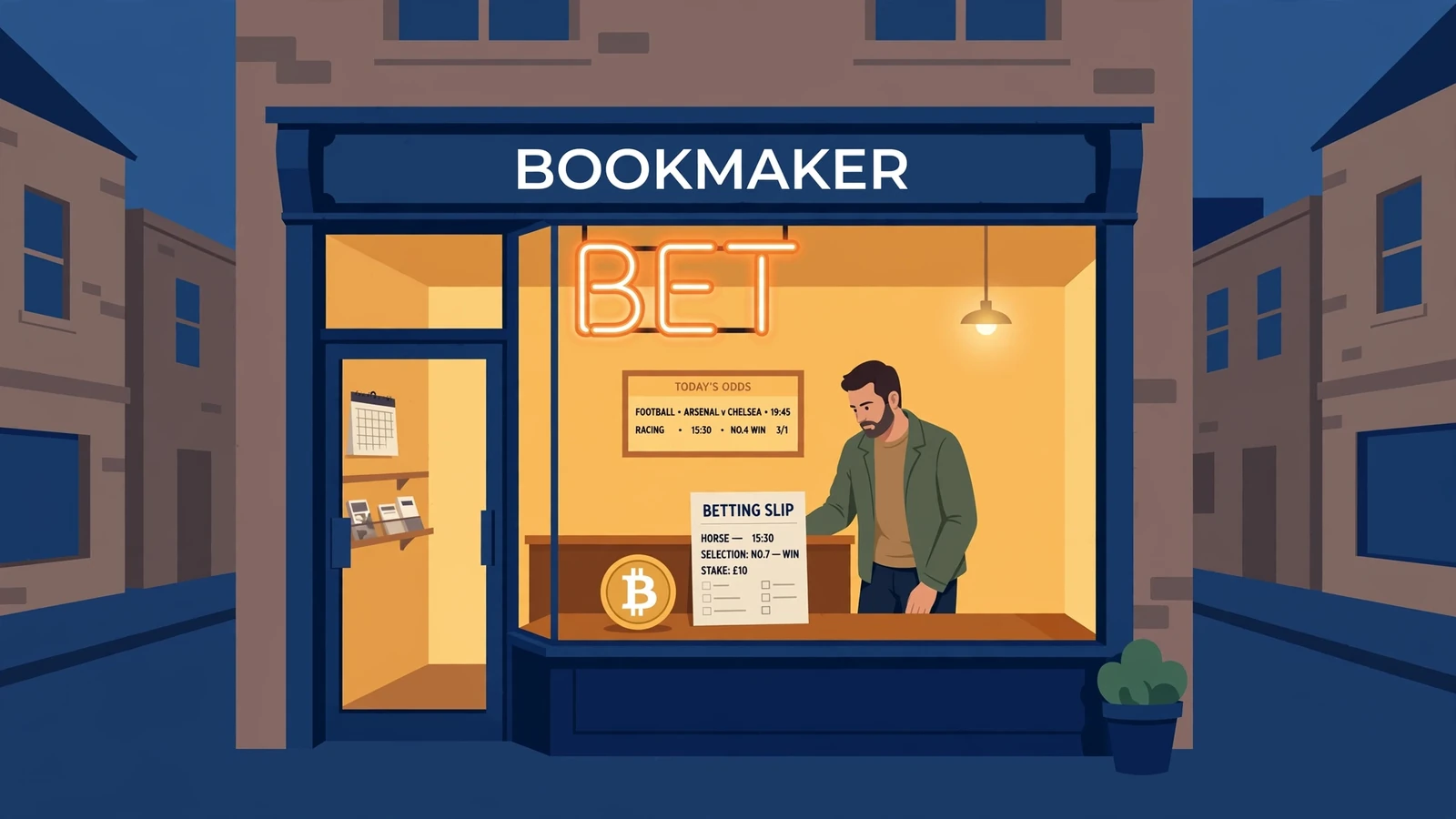
For casinos serving customers in Great Britain, the regulatory position is also decisive. Operators providing online gambling services to consumers in Great Britain must hold a UK Gambling Commission licence, regardless of where they are based. However, UKGC-licensed casinos must not accept cryptocurrency deposits. This means that a casino advertising Litecoin funding to British customers cannot be treated as a UKGC-licensed destination accepting that payment method. The distinction is important when assessing whether Litecoin is still accepted by casinos in the UK: the answer depends on the operator’s market, licence and stated payment policy.
How a Litecoin Deposit Is Made
Where Litecoin funding is offered, the casino normally presents a deposit address or a payment request for the relevant transaction. The payer must use the specified cryptocurrency and send the amount from a compatible wallet. A mistake in the address, network or asset can prevent the casino from crediting the account, and crypto transactions are generally irreversible. A specialist payment-method review identifies this lack of reversibility as a central condition of crypto deposits, rather than a minor administrative detail.
The account balance is credited only after the operator’s payment process recognises the transaction. Cryptocurrency deposits are described in the available payment data as near-instant, but the practical result still depends on network processing and the casino’s internal crediting procedure. A displayed deposit status should therefore be distinguished from the point at which funds become available for wagering.
KYC Verification and Deposit Approval
A Litecoin payment does not remove identity controls. Casinos must require players to verify their identity before allowing deposits and withdrawals. KYC verification can therefore affect access to an account even where the blockchain transaction itself is fast. The operator may also require payment-method verification before winnings connected with bonus funds can be withdrawn.
This creates a difference between sending Litecoin and receiving casino credit. The network can process a transaction while the operator is still applying account checks, reviewing source-of-funds information or confirming that the payment belongs to the registered customer. The relevant conditions are set by the casino and should be read before a deposit is initiated.
Fees, Limits and Asset Value
Litecoin deposit fees are not fixed across the market. Cryptocurrency payment fees vary with transaction size and current network volume, according to a specialist payment-method review. The casino may also impose its own conditions, including minimum or maximum transaction limits, although the available evidence does not establish a universal Litecoin threshold or a standard no-minimum rule.
The value of the deposited coin can change quickly. As a result, the amount sent in Litecoin and the value credited or later withdrawn in another currency may not have the same market value. This exposure is separate from the casino’s game rules and is part of the payment method itself.
Searches for Litecoin casinos offering free spins, no-deposit bonuses, no-wagering bonuses or real-money play should not be interpreted as evidence that such terms accompany every Litecoin deposit. Promotions are separate operator conditions, while the availability of Litecoin is a payment decision. No verified market-wide offer establishes that Litecoin deposits are linked to a no-deposit bonus, free spins or the absence of wagering requirements.
Playing Online Slots with Litecoin Payments
Litecoin support is a payment feature, not a description of the games available at a casino. A site may accept Litecoin while offering slots through its standard casino lobby, just as another operator may host a similar range of games but restrict deposits to cards, e-wallets or bank transfers. The presence of a Litecoin logo therefore does not establish that every slot can be funded with Litecoin, nor does it identify particular machines.
For British players, the relevant distinction is between the casino account and the slot catalogue. Litecoin is used to move funds into or out of the account where the operator permits that method. The games are then accessed through the casino’s website or application under the account’s applicable terms. Payment-method availability, fees and withdrawal requirements are operator-dependent. A casino can choose not to offer Litecoin even when the games themselves are available to customers through other payment routes.
How Litecoin-funded slot play works
The deposit stage normally involves selecting Litecoin from the cashier, generating or displaying the required transaction details, and transferring the cryptocurrency from a compatible wallet. Cryptocurrency deposits are described in the verified payment information as near-instant. That does not mean that every casino credits funds at exactly the same moment: account checks, network processing and the operator’s internal confirmation procedure can affect when the balance becomes playable.
Making a Litecoin Deposit
Choose Litecoin from the casino’s cashier or payment menu.
Copy the specific deposit address or scan the payment request provided by the operator.
Send the required amount from a compatible cryptocurrency wallet to the provided address.
Once the balance is credited, slot play is treated as casino activity rather than as a separate type of Litecoin game. The currency used for the deposit does not prove that a particular title was designed for cryptocurrency, and it does not provide a separate catalogue of “Litecoin slots”. Available games depend on the operator’s software arrangements and jurisdictional offering. The verified information does not identify named slot titles, providers or game characteristics, so no reliable list of Litecoin-specific machines can be supplied.
Mobile and online access
References to Litecoin mobile slots generally describe the combination of mobile casino access and Litecoin funding. They do not establish that a separate mobile-only set of games exists. The same principle applies to online slots paid for with Litecoin: the payment method concerns the account balance, while the slot interface concerns the casino platform. Whether the cashier and game lobby function on a mobile device is an operator-level matter and should not be inferred from the availability of Litecoin alone.
Withdrawal timing is also separate from game access. The verified data states that cryptocurrency withdrawals typically settle within an hour, but withdrawal requirements remain dependent on the operator. A casino may impose account or payment checks before releasing funds, and the available evidence does not establish uniform Litecoin conditions across operators.
Accordingly, the question “is Litecoin slots legit in the UK?” cannot be answered by the payment symbol alone. Legitimacy depends on the status and terms of the casino offering the service, while Litecoin acceptance merely indicates a possible funding route. It also cannot substantiate claims about free Litecoin slots, particular real-money machines or guaranteed game availability. Official operator information does not identify a universal catalogue of slots payable with Litecoin.
Litecoin Slots for Real-Money Play on Mobile and Desktop
Real-money slot play with Litecoin depends on two separate conditions: the casino account must support Litecoin transactions, and the operator must provide slot games that function on the chosen device. A Litecoin-enabled payment method does not itself create a separate category of games. It funds an account in which the available online slots can be played, subject to the operator’s rules and the player’s account status.

Mobile apps, mobile sites and desktop access
A dedicated app is not essential for playing slots with Litecoin. Some operators may provide an application, while others deliver the same account functions through a mobile-optimised website. Desktop access normally uses a browser, whereas mobile play may use either a browser or an app. The relevant distinction is therefore the access format, not the cryptocurrency itself.
The payment stage can still require account controls that are separate from gameplay. UK gambling operators must require identity verification before allowing deposits and withdrawals. A Litecoin-funded account is consequently not exempt from KYC verification merely because the transaction is made through a digital wallet. The casino may also require payment-method verification before releasing winnings connected with bonus funds.
No verified information identifies a particular app, mobile site, slot machine or provider that accepts Litecoin for British players. The available evidence therefore does not support a ranked list of Litecoin slot games or a claim that a named machine is accessible through every Litecoin casino. The operator’s cashier and game lobby remain the relevant sources for determining whether the payment route and selected game are available together.
Real-money transactions and settlement
Cryptocurrency deposits are described as near-instant in the available payment information, which can allow funds to appear quickly in an eligible casino account. Cryptocurrency withdrawals are stated to settle within an hour. These timings concern the payment route rather than the time required for an operator’s internal checks, so they should not be treated as a guarantee for every account or transaction.
A crypto transaction is generally irreversible, according to a single specialist review, and the value of some cryptocurrencies can change quickly. That creates a practical difference between depositing Litecoin and simply transferring a fixed amount of fiat currency: the amount sent, the exchange value and the casino’s accounting method all matter. Payment-method availability, transaction limits and withdrawal requirements remain operator-dependent. A specialist review also reports that payment methods have different minimum and maximum transaction limits, but it does not establish a universal Litecoin limit for UK slot play.
Claims such as “no-deposit Litecoin slots” or “free real-money Litecoin play” should therefore be treated cautiously. A promotional balance, where offered, can involve separate verification and withdrawal conditions; the existence of Litecoin support does not establish that a casino offers a no-deposit promotion. Similarly, “slots that accept Litecoin” describes an account funding route, not a guaranteed feature of every game, app or device.
For mobile and desktop play alike, the essential checks are whether Litecoin appears in the casino cashier, whether the account has passed the required verification, and whether the operator’s published terms connect that payment method with withdrawals. Without those confirmations, device compatibility alone does not demonstrate access to real-money Litecoin slots.
Card and Litecoin Deposit Routes at UK Casinos
Card funding and Litecoin payments are separate routes, governed by different practical and regulatory conditions. A casino may display several payment options, but availability is determined by the operator rather than by the fact that a player is located in Great Britain. Consequently, a search for Litecoin casinos that also accept cards does not establish that every listed method will be available at a particular site.
Debit Cards and Litecoin Payments
Debit cards remain familiar and widely accepted for online gambling transactions. At casinos that offer this route, debit-card deposits have minimums typically set between £10 and £20, and the casino usually does not add a deposit fee. The exact threshold is operator-dependent and should be stated in the payment terms.
Litecoin follows a different transaction model. It is a cryptocurrency payment rather than a card transaction, so it does not use the card network or the cardholder’s bank authorisation process. A casino may therefore support Litecoin while offering only debit cards for conventional funding, or may omit Litecoin altogether. The presence of a Litecoin balance does not imply that a direct withdrawal to a debit card will be available either.
Search phrases such as “Litecoin direct withdrawal” can therefore obscure an important distinction: deposits and withdrawals are separate services. A casino may accept Litecoin deposits but impose different withdrawal conditions, including KYC verification, an original payment method policy, or restrictions connected with bonus funds.
Credit Cards Are Not a Permitted Route
Credit-card gambling transactions have been banned for UKGC-licensed operators since April 2020. The prohibition applies to credit-card payments used for gambling in Great Britain, including attempts to fund casino play through a credit card rather than through a debit account. E-wallet arrangements funded by credit cards are also restricted where the funds are used for gambling.
Credit Card Ban
Credit-card gambling transactions are prohibited for UKGC-licensed operators, and attempts to use them for casino play are restricted.
This makes the expression “Litecoin credit card casino” misleading in the British context. Litecoin is not a mechanism for bypassing the credit-card prohibition, and a card-labelled payment option should not be treated as evidence that credit funding is allowed. Operators must also use payment service providers authorised under the applicable payment-services framework.
Withdrawal Timing and the Deposit Route
A single payment route does not determine the entire deposit-to-withdrawal journey. A payment-industry review reports that cryptocurrency withdrawals can settle in under an hour, while debit-card withdrawals take one to three business days. These are reported processing periods, not a guarantee for every operator, because internal review, KYC verification and payment-method rules can delay release.
Accordingly, Litecoin may offer a different withdrawal timetable from debit-card funding, even where both options appear in the same cashier. No-deposit status, slot access or bonus eligibility does not change the prohibition on credit-card gambling transactions, and promotional conditions must be assessed separately from the payment method.
Litecoin Casino Bonuses and No-Deposit Promotion Conditions
Bonuses attached to Litecoin-funded play require separate checks from the payment method itself. A casino may advertise a welcome offer while restricting eligibility by country, payment method, account status or verification stage. Therefore, the existence of a Litecoin deposit route does not establish that a Litecoin deposit qualifies for a particular promotion.
For UK players, the relevant distinction is between a welcome bonus, a real-money offer and a no-deposit promotion. A welcome bonus normally forms part of account registration and initial funding conditions, while a real-money offer may depend on deposits or wagering activity. A no-deposit bonus is different because it can be credited without the promotional deposit described in the terms. The verified information does not identify current named offers, bonus codes or specific slots sites that accept Litecoin deposits, so no particular promotion can be presented as available.
Wagering and payment conditions
The available evidence does not establish a uniform wagering rule across Litecoin casinos. A specialist casino review reports no-deposit wagering requirements ranging from 30x to 50x the bonus amount. That range belongs to the cited review category rather than to a confirmed market-wide rule. Each promotion would therefore require its own terms to establish the applicable calculation, eligible games, expiry conditions and any maximum withdrawal rule.
Payment verification can also affect whether promotional winnings are withdrawable. UK gambling operators require identity verification before deposits and withdrawals, while bonus-funded withdrawals require verification of the payment method. A Litecoin transaction may therefore be visible in the account history without removing the separate KYC verification requirement or the operator’s checks on the source and ownership of the funds.
The original payment method policy is also relevant where a casino applies it to withdrawals up to the deposited amount. The available facts do not show how a particular operator applies that policy to Litecoin, nor whether promotional winnings can be returned to the same wallet. Those conditions must be stated by the operator rather than inferred from the presence of a cryptocurrency logo.
Transaction limits add another restriction. Payment methods have different minimum and maximum limits, and a specialist casino review indicates that these limits are operator-dependent. The same may apply to bonus eligibility: a qualifying Litecoin deposit can be subject to a minimum amount, while a maximum deposit may limit the bonus calculation. No unsupported figure should be assumed.
Consequently, searches for Litecoin welcome bonuses, real-money slots promotions, no-deposit offers or bonus codes describe possible promotion types, not verified availability. The decisive documents are the casino’s current bonus terms, payment conditions and KYC requirements.
Minimum Litecoin Deposits and Mobile Payment Practicalities
The minimum Litecoin deposit is not a fixed market standard. Each operator sets its own minimum and maximum transaction limits, and the figures may differ between payment methods. Consequently, a casino advertising Litecoin support does not necessarily accommodate a small deposit. The availability of a low-value transaction must be confirmed in the operator’s payment terms or cashier interface.
A proposed deposit of £5 illustrates the distinction between the currency and the casino’s acceptance rules. Litecoin itself can be divided into smaller units, but that does not require an operator to accept a deposit of any particular sterling value. A minimum may be imposed by the casino, the payment service provider, or the technical configuration of the cashier. No verified market-wide minimum for Litecoin deposits is available.
Cryptocurrency charges also require separate attention. A specialist payment overview reports that cryptocurrency fees vary according to transaction size and current network volume. A small deposit is therefore not automatically economical: a fee can represent a larger proportion of a low-value transaction than of a larger one. The casino’s terms should state whether charges are absorbed by the operator or deducted from the transferred amount. Where that information is absent, the final credited balance cannot be established in advance.
Mobile use changes the practical setting rather than the underlying payment rules. A mobile casino site may display a Litecoin option through a browser-based cashier, while a particular app may not provide the same payment interface. The presence of a mobile layout therefore does not prove that Litecoin deposits are enabled. The relevant evidence is the payment list shown after account access, together with the operator’s conditions for the account and transaction.
A mobile transaction also depends on access to the Litecoin wallet and the ability to review the destination address before confirmation. Cryptocurrency transfers are not treated as reversible card payments; a wrong address or incorrect amount may not be recoverable. The facts available for this section do not establish a universal mobile processing time, minimum, maximum or fee.
The same qualification applies to Non GamStop casino sites that advertise Litecoin. Their payment menus may differ from those of other operators, and payment-method availability, fees and withdrawal requirements vary by operator. A Litecoin logo alone is insufficient evidence that a small mobile deposit will be accepted or that the resulting balance can be withdrawn through the same route.
Alternatives to Litecoin for Casino Deposits and Slots
When Litecoin is unavailable, the relevant alternative depends on whether priority is placed on deposit speed, withdrawal access, or the ability to fund slot play without using a card. Payment methods are selected by individual operators, so no single route is available across every casino serving British customers. The casino’s licence and payment terms remain separate questions from the games available after funding.
E-wallets
Skrill and Neteller provide an alternative for slot deposits where the operator supports them. Deposits are instant, while withdrawals typically clear within 24 hours. This creates a shorter stated deposit-to-withdrawal journey than a direct bank transfer, although the casino may still require KYC verification or an internal review before releasing funds.
These wallets are therefore relevant to searches for a best Litecoin alternative in the UK, but their usefulness depends on account eligibility and casino acceptance. They do not establish that a particular site is a best Litecoin slots site, since payment support does not identify the games hosted by that operator. Official sources do not publish a verified list of specific slot titles linked to each payment method.
Paysafecard
Paysafecard uses a PIN and limits spending to the voucher value without sharing personal financial information with the casino. It can be suitable for controlled slot funding when the operator accepts it, but its withdrawal function is materially more limited: deposits are commonly supported, whereas withdrawals to Paysafecard are rarely supported.
That distinction matters when comparing Litecoin deposit alternatives in the UK. A method that funds play but cannot receive winnings may require a separate withdrawal route, subject to the casino’s rules and payment verification requirements.
Bank transfers
Direct bank transfer is another alternative when cryptocurrency is not available. Deposits and withdrawals typically take three to five business days. It is therefore less aligned with immediate slot funding than an instant e-wallet deposit, but it provides a conventional route for both sides of the transaction.
Trustly can also facilitate a direct transfer from a player’s bank account without requiring a separate wallet or card details. Its deposit is typically transferred instantly, while withdrawals are often processed within the same day, according to a single operator-focused payment review; this timing is not a universal market rule.
The phrase “best Litecoin slots” cannot be resolved through payment speed alone. A verified comparison would also require published information about individual games and operators, which is not available in the supplied evidence. Consequently, the alternatives above describe funding routes, not a ranked list of casinos or slot products.
Litecoin Casinos Outside GamStop: Licensing and Payment Risks
A Non GamStop casino is not part of the UK self-exclusion scheme, but that description does not establish its licensing status. An operator serving customers in Great Britain generally needs a remote operating licence from the Gambling Commission, including when it advertises to people in Great Britain. The legal position therefore depends on the operator’s licence, not on whether its website is connected to GamStop.
Some Non GamStop casinos operate under an overseas licence rather than a UK Gambling Commission licence. That difference affects the regulatory framework governing the business and the checks available to British customers. A UKGC licence can be checked against the Commission’s public register by matching the operator or licence number and confirming the listed domain. An overseas licence requires examination of the relevant foreign regulator and its published register; the existence of such a licence should not be treated as equivalent to UKGC authorisation.
Litecoin and other payment methods
A profile review reports that Non GamStop casinos may support cryptocurrencies, credit and debit cards, bank transfers, Skrill and Neteller. This is a description of reported payment support, not a universal condition of every operator. Litecoin availability must therefore be confirmed in the individual cashier before a deposit is attempted.
The payment route creates separate risks from the licence question. Crypto transactions can be fast, but a profile review also notes that they are generally irreversible and that coin values can change quickly. Card and bank-transfer availability may differ between operators, while Skrill and Neteller introduce their own account and verification requirements. Payment-method availability, fees and withdrawal rules remain operator-dependent.
For a British customer, the advertised payment menu does not override UK restrictions. Credit-card gambling transactions must not be accepted by UKGC-licensed operators, and compliant payment providers must meet the requirements of the Payment Services Regulations 2017 or an equivalent framework. Identity checks are required before deposits and withdrawals, and withdrawal conditions may include an original payment method policy.
Consequently, a site described as accepting Litecoin and not connected to GamStop requires two separate assessments: whether its regulatory status is appropriate for service in Great Britain, and whether its payment terms clearly state verification, fees and withdrawal procedures. Neither Litecoin support nor the absence of GamStop establishes that the operator is suitable or authorised.
Do non-GamStop UK casinos accept Paysafecard?
Yes, Paysafecard is commonly accepted for deposits at online casinos, including some Non-GamStop casinos. Withdrawals to Paysafecard are rarely supported.
Are there UK casinos that still accept credit cards?
No, UKGC-licensed operators cannot accept credit card gambling transactions. Some overseas Non-GamStop casinos may still support credit cards, but they are not in the same licensing category as UKGC-licensed casinos.
Do I need to deposit to use these spins?
No, no-deposit bonuses do not require a deposit, but they often carry wagering requirements of 30x to 50x the bonus amount.
Do I need a license to operate a crypto casino?
Yes, businesses providing remote gambling facilities to customers in Great Britain generally need an operating licence from the Gambling Commission, including when advertising to GB consumers. This requirement applies regardless of whether the casino accepts cryptocurrency.
Can I use cryptocurrency at UKGC-licensed casino sites?
No, the stated market restrictions prohibit cryptocurrency deposits at UKGC-licensed casinos. Litecoin acceptance may instead be found at some overseas operators, which are not UKGC-licensed on that basis.
Created by the ”Casinouk Games Hub” editorial team.